
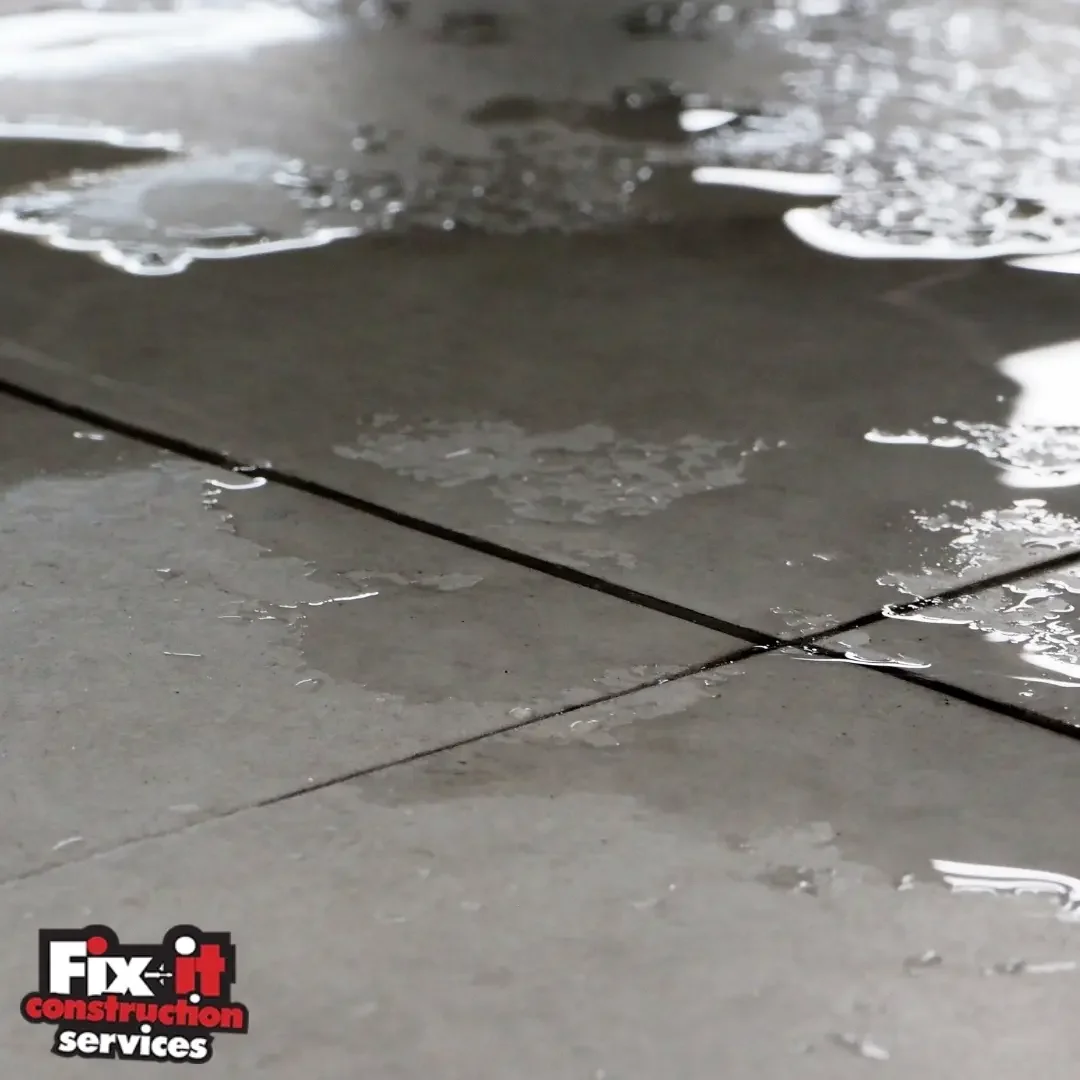
Water pooling on a tile floor from below-slab leak activity, representing the surface evidence Fix-It Construction Services investigates in Harrisonburg, VA homes
What Harrisonburg Homeowners Don't See Can Cost Them Dearly
A slab leak is one of the most expensive home repair scenarios a homeowner can face, and the specific reason it becomes so costly is almost always the same: it went undetected too long. The water leaking beneath the concrete foundation of a Harrisonburg home does not announce itself with the dramatic immediacy of a burst pipe or a flooded basement. It communicates through subtle signals that most homeowners either miss entirely or attribute to something else until the damage has advanced to the scope that early detection would have addressed for a fraction of the eventual cost.
The Shenandoah Valley's housing stock creates a specific slab leak context that the regional construction and geology together produce. Harrisonburg and Rockingham County carry a meaningful portion of residential properties built on slab-on-grade foundations whose below-slab plumbing systems have been managing the regional water chemistry, the soil movement that the Shenandoah Valley's clay and limestone subsoil creates through seasonal moisture variation, and the age-related deterioration that decades of service advance in the copper and galvanized supply lines that older regional construction placed below those slabs. The regional geology's limestone character creates both the water chemistry that accelerates mineral deterioration in metallic supply lines and the soil behavior that the Shenandoah Valley's subsoil moisture variation advances in the ground conditions surrounding below-slab plumbing between maintenance assessments.
Understanding what slab leaks cost when they go undetected, how the Harrisonburg area's specific conditions contribute to both the risk and the detection challenge that regional homeowners face, and why video inspection and early professional assessment saves amounts that dwarf the detection investment gives Shenandoah Valley homeowners the practical framework for treating a suspected slab leak as the urgent professional assessment matter it genuinely represents rather than the deferred investigation that the leak's subtle early signals allow to be postponed until the cost of that postponement becomes visible.
How Slab Leaks Develop in Harrisonburg Area Homes
The Shenandoah Valley's limestone water chemistry creates the mineral interaction with copper supply lines that the regional water quality delivers to the below-slab plumbing of Harrisonburg area homes through the calcium and magnesium content that the regional geology contributes to the water supply. The mineral interaction that limestone-influenced water creates with copper pipe interiors advances the pinhole corrosion that copper supply lines develop over decades of regional water contact at rates that the regional water chemistry creates more aggressively than neutral water chemistry markets produce between comparable service intervals. A copper supply line installed below the slab of a Harrisonburg home built in the 1960s through 1980s has been managing the regional limestone water chemistry for decades, and the pinhole leak that mineral-driven corrosion eventually produces in those aging copper lines is the most common slab leak mechanism across the Shenandoah Valley's established residential communities.
Soil movement from Shenandoah Valley subsoil conditions creates the physical stress on below-slab plumbing that the seasonal moisture variation in the clay and limestone subsoil that Rockingham County's residential landscape sits on advances through the expansion and contraction that those soil types create around and beneath residential slab foundations. The soil movement that wet seasons expand and dry seasons contract in the Shenandoah Valley's subsurface creates the pipe stress at connection joints and the fitting positions that physical movement advances toward the failure threshold between the assessment intervals that below-slab infrastructure does not provide visible access for routine inspection.
Aging pipe materials in Harrisonburg's older housing stock include the galvanized steel supply lines that the construction eras before copper's widespread residential adoption placed below slab foundations, and those galvanized lines carry the internal corrosion that the decades of the regional water chemistry contact advances in those aging materials more aggressively than the copper alternatives that later construction provided as the below-slab supply material.
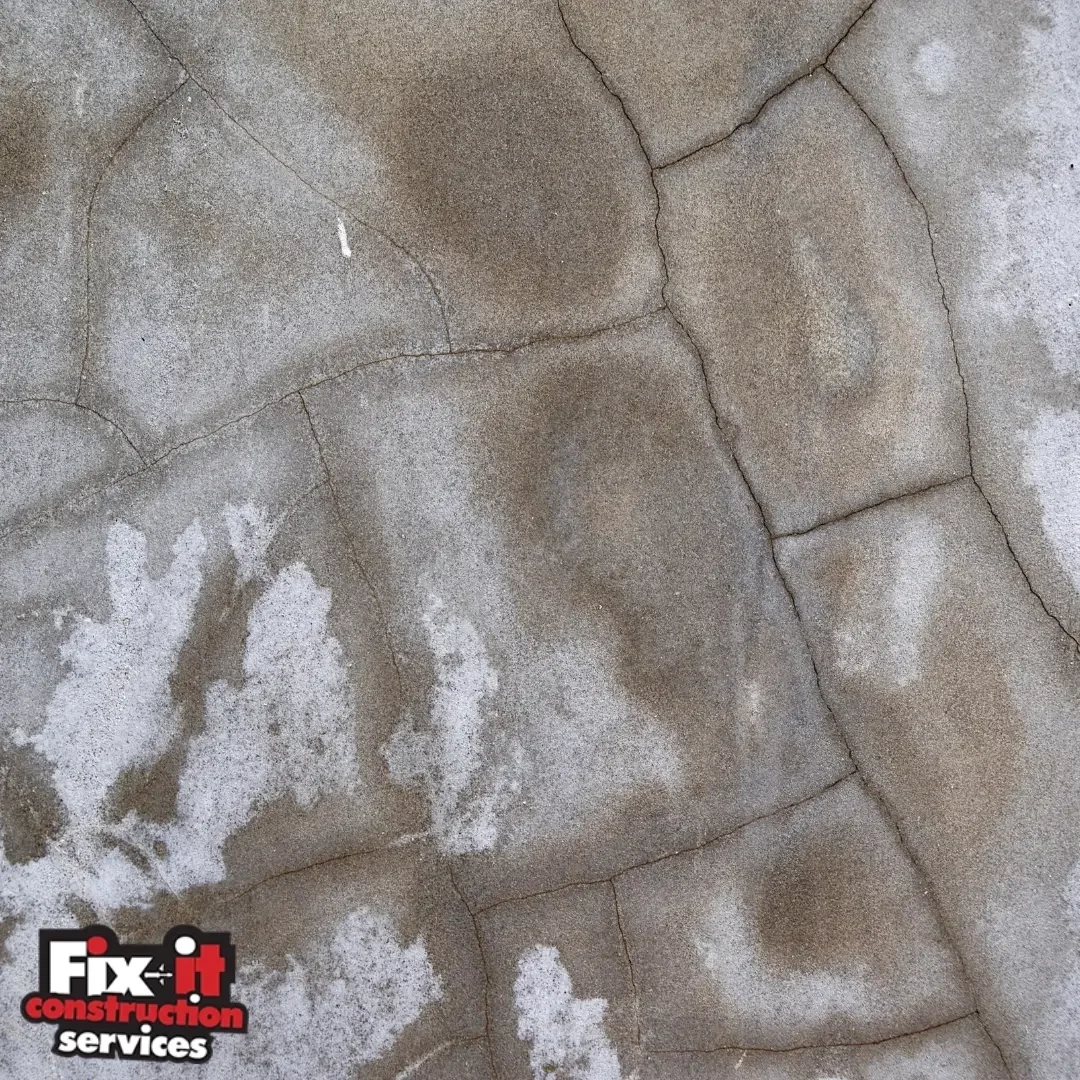
Cracked and moisture-stained concrete slab showing the structural consequence of extended undetected slab water loss, Harrisonburg VA
What an Undetected Slab Leak Actually Costs
Foundation damage represents the most severe and most expensive consequence that an undetected slab leak eventually creates in the Harrisonburg area home carrying that active below-slab water loss. The water that the slab leak deposits beneath the foundation continuously saturates the subsoil conditions that the Shenandoah Valley's clay-influenced geology creates around residential slab foundations, and the soil movement that continuous moisture creates in those clay-influenced subsoil positions advances the foundation settlement, the slab cracking, and the structural displacement that significant foundation repair addresses at costs that dwarf the slab leak detection and repair investment that early identification would have required.
Mold establishment in the building assemblies above the slab positions where moisture migration from the below-slab water loss reaches the above-grade living space creates the air quality concern and the remediation cost that the warm, humid Shenandoah Valley spring and summer conditions specifically accelerate once moisture has established the biological growth substrate that those ambient temperatures sustain. The mold remediation cost that established biological growth in wall cavities, subfloor assemblies, and the living space flooring above active slab leak positions requires addressing represents a significant added cost dimension that early slab leak detection specifically prevents.
Elevated water bills from the continuous water loss that an active slab leak deposits beneath the foundation without providing any household benefit represent the ongoing financial cost that undetected leaks create against regional utility rates through the months or years that inadequate detection allows active water loss to continue. The water meter behavior that an active slab leak produces, specifically the continued meter movement that occurs when all household water use has stopped, provides the most accessible early detection indicator that Harrisonburg homeowners can monitor without professional equipment.
The Early Warning Signs Harrisonburg Homeowners Should Know
The slab leak signals that Shenandoah Valley homeowners most consistently report in the period before professional assessment confirms the below-slab water loss reflect the subtle surface evidence that active water loss beneath a residential slab foundation creates in the above-grade living space and the household systems those homes carry.
Warm or hot spots on floor surfaces are the most specifically diagnostic early slab leak indicator available to the homeowner without professional equipment because the heated water that a hot supply line leak deposits beneath the slab transmits the warmth through the concrete to the floor surface above. A warm spot on a tile or hardwood floor that does not correspond to the radiant heating or the solar exposure that would naturally create warmth at that specific floor position communicates the hot water supply line leak beneath it with the specificity that no other household system produces at that same floor surface position.
Unexplained water sound within the slab or the foundation when all household water use has stopped communicates the active water movement that a slab leak creates in the building system whose water should be entirely static when no household fixture is operating. The rushing, dripping, or hissing sound that persists after every household valve is confirmed closed indicates the active supply line leak that the sound's presence specifically communicates without requiring any equipment beyond the attentive listening that the quiet household environment allows.
Floor surface damage progression including hardwood warping, tile grout cracking at floor positions away from building envelope transitions, and the carpet dampness that moisture migration through the slab creates at the floor positions above active leak locations all represent the physical evidence that accumulated moisture reaching above-slab floor materials from below creates over the weeks and months of active below-slab water loss.
Foundation cracking advancement at slab edge positions, at interior floor transitions, and at the wall-to-floor interfaces that continuous subsoil moisture saturation advances in the foundation assembly above the active leak position communicates the structural consequence that extended undetected slab water loss creates in the foundation conditions of Harrisonburg area homes.
Why Video Inspection Changes Everything
Video camera inspection of below-slab plumbing provides the definitive diagnostic capability that the symptom-based assessment that surface evidence provides cannot match for the precise leak location and the pipe condition assessment that effective slab leak repair requires before the slab is opened for access. The camera that navigates through the below-slab plumbing system identifies the specific leak location, documents the pipe condition at adjacent positions that may create additional failure risk, and provides the repair scope information that targeted intervention requires rather than the exploratory opening that location-uncertain repair demands.
The repair cost difference between targeted video-guided slab leak repair and exploratory repair without precise location data is substantial because the concrete cutting, the excavation, and the below-slab access that slab leak repair requires creates the disruption and the restoration cost that location uncertainty multiplies when the repair opening must cover the general zone that symptom assessment identified rather than the specific position that video inspection confirmed. A precisely located slab leak repair creates a targeted opening. An imprecisely located repair creates the extended opening that location uncertainty requires.
Non-invasive detection methods including acoustic leak detection and thermal imaging that professional leak detection employs before video inspection provides the above-slab evidence that narrows the investigation area before the video confirmation that precise location requires advances the detection toward the specific pipe position that repair planning needs.
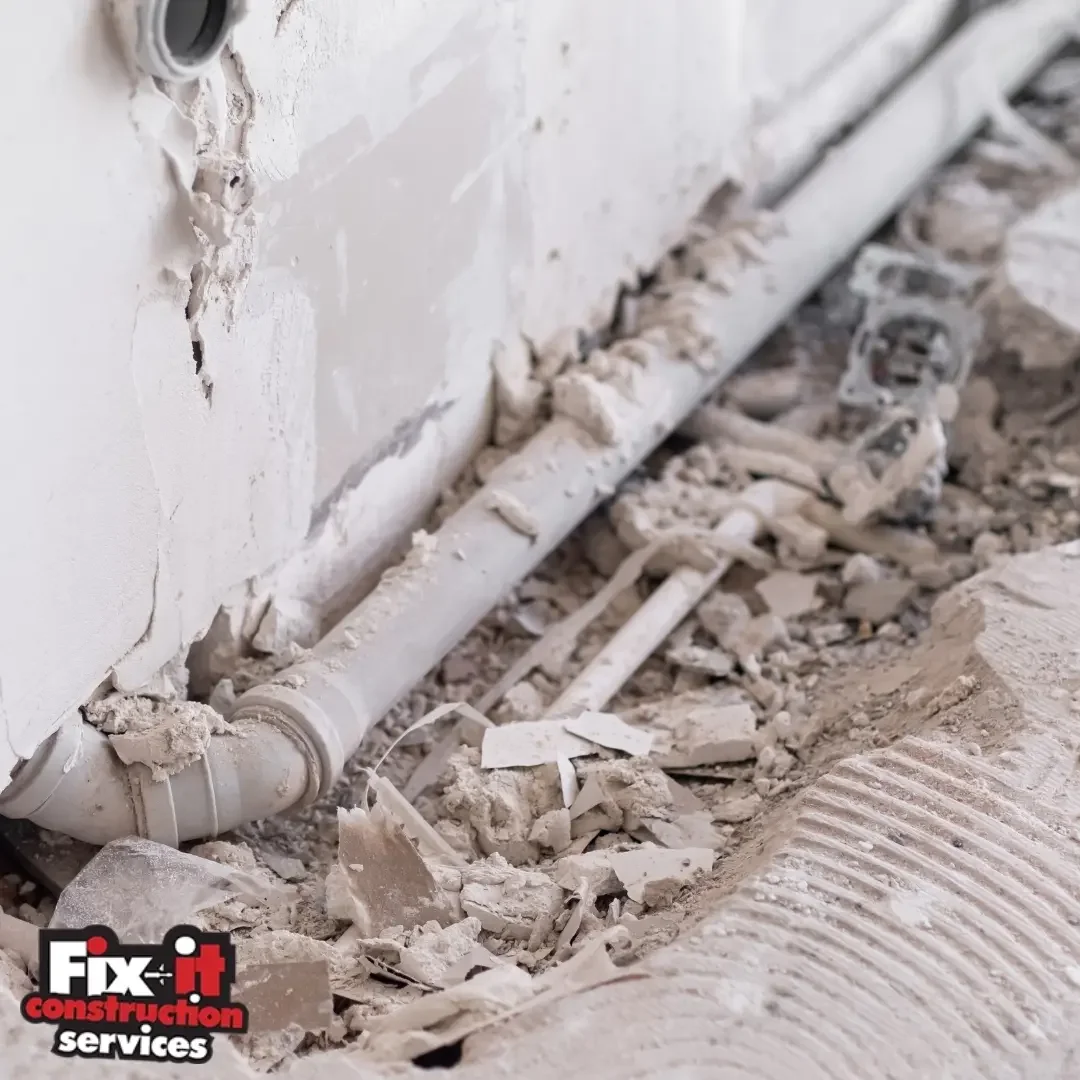
Concrete slab cut open during slab leak repair exposing below-slab plumbing, representing the targeted repair access Fix-It Construction Services performs in Harrisonburg, VA
The Fix-It Construction Services Slab Leak Response
Local Harrisonburg knowledge that Fix-It Construction Services brings to slab leak assessment reflects the regional construction era awareness, the Shenandoah Valley subsoil conditions, and the limestone water chemistry's specific effects on the below-slab pipe materials that the regional housing stock's construction history created as the predominant slab leak mechanisms in the Harrisonburg area. That local knowledge informs the assessment approach that regional conditions specifically require rather than the generic slab leak assessment calibrated to average construction conditions without the Shenandoah Valley's specific contributing factors addressed.
Complete repair scope management from the initial detection through the concrete restoration that slab access and repair requires provides the single-contractor accountability that slab leak repair specifically benefits from when the plumbing repair, the concrete work, and the flooring restoration that comprehensive slab leak remediation involves are managed through a single professional relationship rather than the separate contractor coordination that managing those trades independently requires.
Licensed and insured execution for the plumbing, the structural concrete work, and the building system modifications that slab leak repair engages confirms that the completed repairs satisfy the code standards and the workmanship quality that the Harrisonburg home's structural and plumbing systems specifically require from the professional intervention that slab leak repair represents.
Frequently Asked Questions
What does slab leak detection cost compared to the damage it prevents? Professional slab leak detection represents a modest investment relative to the foundation repair, the mold remediation, and the flooring restoration that extended undetected water loss creates in the Harrisonburg home above an active below-slab leak. Detection costs that identify an active leak before foundation damage has advanced represent a fraction of the remediation costs that the same leak creates when the subsoil saturation advances foundation movement and the above-slab moisture migration reaches the mold establishment threshold the Shenandoah Valley's warm, humid conditions accelerate.
How long can a slab leak go undetected in a Harrisonburg home? Active slab leaks go undetected for months to years in homes whose occupants did not recognize the early signals or attributed them to other causes. The warm floor spot that seemed like a quirk of the home. The water bill increase that seemed like a seasonal variation. The floor creak that seemed like normal settling. Each of those signals communicates the below-slab water loss that professional assessment would have confirmed and addressed at the early-stage repair cost that each deferral month multiplied against the eventual discovery scope.
How does the Shenandoah Valley's limestone geology specifically increase slab leak risk? The limestone-influenced water chemistry that Harrisonburg's regional geology creates accelerates the pinhole corrosion that copper supply lines develop through mineral interaction with the regional water supply. That accelerated corrosion advances the failure timeline in the aging copper below-slab plumbing of Harrisonburg's older housing stock more rapidly than neutral water chemistry environments produce in comparable pipe materials between comparable service intervals, making the Shenandoah Valley's established residential communities specifically vulnerable to the slab leak risk that regional water chemistry and aging pipe materials together create.
What repair options exist for confirmed Harrisonburg slab leaks? Targeted pipe repair at the confirmed leak location represents the appropriate scope when the surrounding pipe condition assessment confirms adequate integrity at adjacent positions. Pipe rerouting above the slab eliminates the below-slab access requirement entirely by replacing the compromised below-slab line with a new above-grade routing. Full repipe replaces the entire below-slab supply system when the pipe condition assessment identifies the distributed deterioration that targeted repair at a single location does not adequately address given the remaining pipe's condition across the system.
How quickly should a suspected Harrisonburg slab leak be assessed? Immediately. The active water loss that an unconfirmed slab leak may be producing does not pause during the scheduling delay that deferred assessment creates. Every day of active below-slab water loss advances the subsoil saturation, the foundation moisture loading, and the above-slab moisture migration that the eventual repair scope reflects as the cumulative damage that each assessment deferral day contributed to. Professional assessment that confirms or rules out an active slab leak converts the uncertainty that suspected but unconfirmed slab leaks create into the actionable information that either confirms repair urgency or eliminates the concern.
Early Detection Is the Only Affordable Slab Leak Strategy
The slab leak that Harrisonburg and Shenandoah Valley homeowners address at the early detection stage costs what professional detection and targeted repair require. The slab leak that goes undetected through the months and years that subtle signals allow to pass without professional assessment costs what foundation repair, mold remediation, flooring restoration, and the extended water loss against regional utility rates together accumulate to over that deferral period. The only financially rational slab leak strategy is the early detection and prompt repair that converts a manageable plumbing repair into the avoided catastrophe that early intervention specifically delivers for the Harrisonburg area homes whose below-slab plumbing the regional water chemistry and subsoil conditions continuously test.
Phone: 540-298-1776 Website: https://www.fixitrepairs.net/
Serving Harrisonburg, VA and the surrounding Shenandoah Valley communities with quality craftsmanship and the service your home deserves.
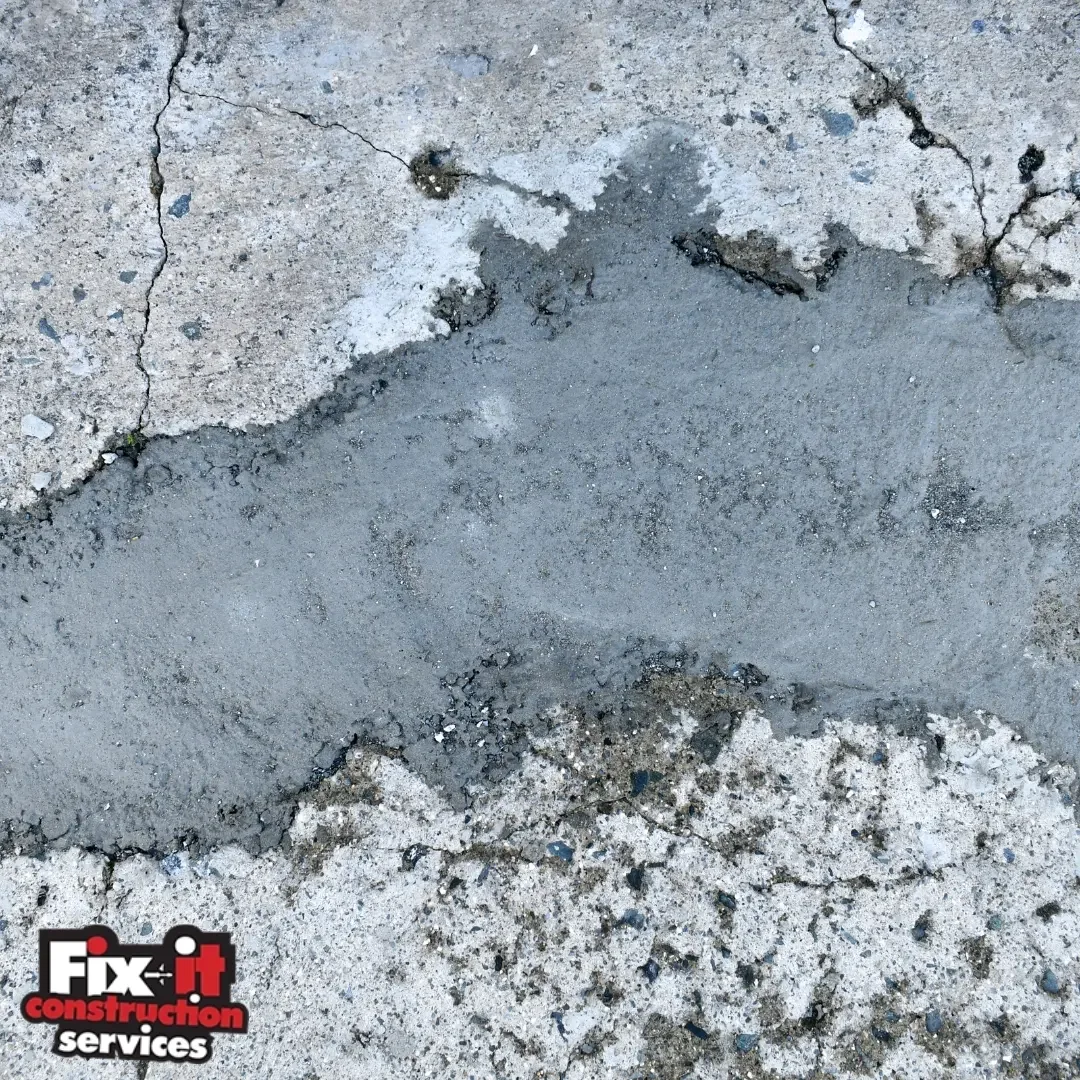
Close-up of a cracked concrete slab with active moisture seeping through the fracture, representing the foundation damage that undetected slab leaks create in Harrisonburg area homes
